AI UGC Strategy
How to Make AI UGC Ads Feel More Authentic in 2026
Table of Contents
- 01The Growing Challenge: AI Content vs Consumer Trust
- 025 Ways to Make AI UGC Ads Feel More Authentic
- 031. Start With a Relatable Situation
- 042. Keep the Product Accurate
- 053. Write Scripts That Sound Like People Speak
- 064. Choose a Setting That Makes Sense
- 075. Be Transparent About AI
- 08AI Should Improve the Creative Process
- 09Before You Publish Your Next AI UGC Ad
- 10Final Thoughts
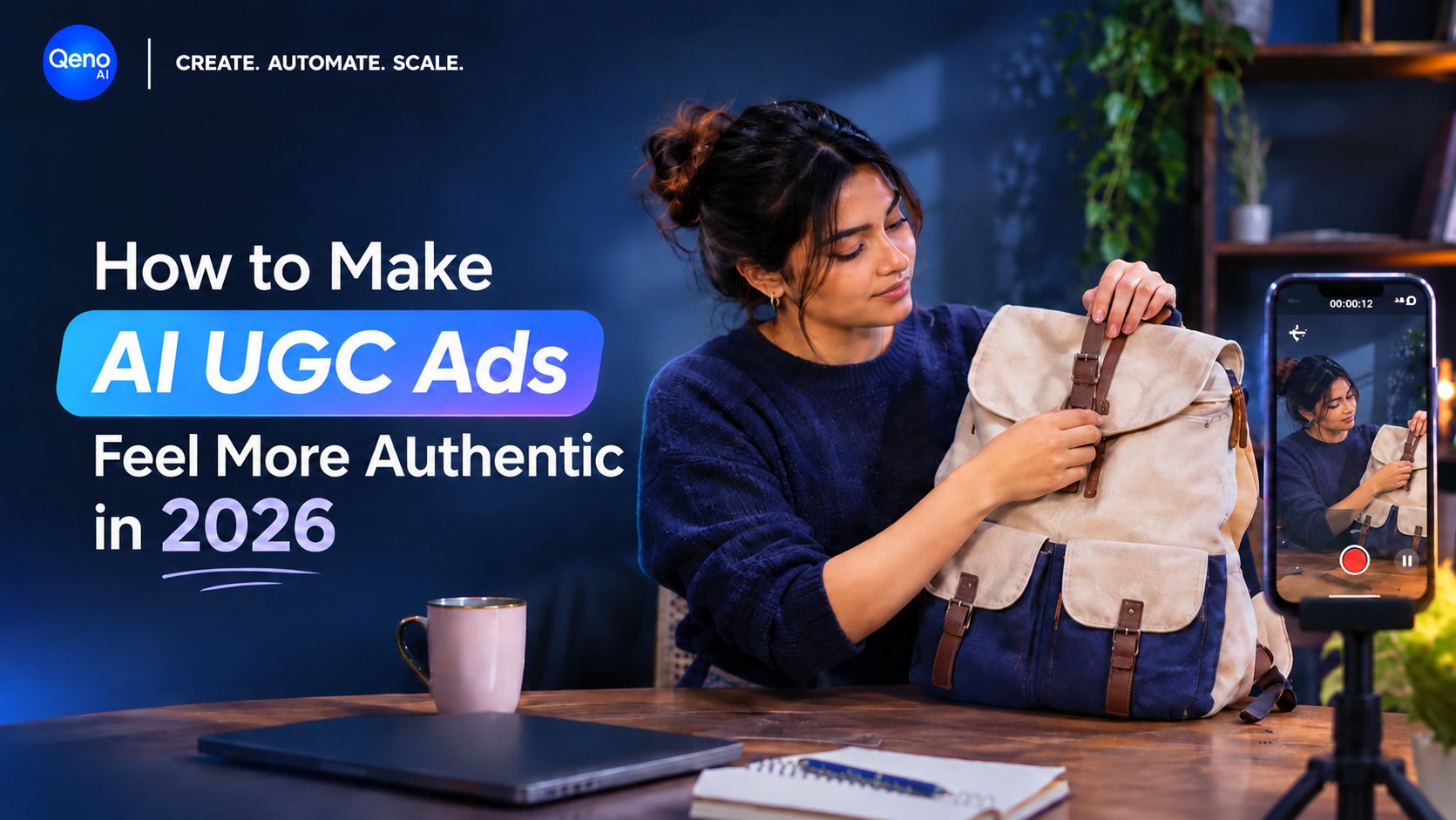
AI can generate a video of someone presenting a product in seconds. The lighting looks perfect, the creator looks convincing, and the product is beautifully placed. But something can still feel off.
Maybe the person sounds too scripted, the product demonstration feels unnatural, or the entire video looks like another advertisement viewers have already scrolled past.
That's the challenge with AI UGC videos. Creating a video is becoming easier, but creating one that feels relatable, credible and worth watching requires much more than a good-looking AI creator.
The Growing Challenge: AI Content vs Consumer Trust
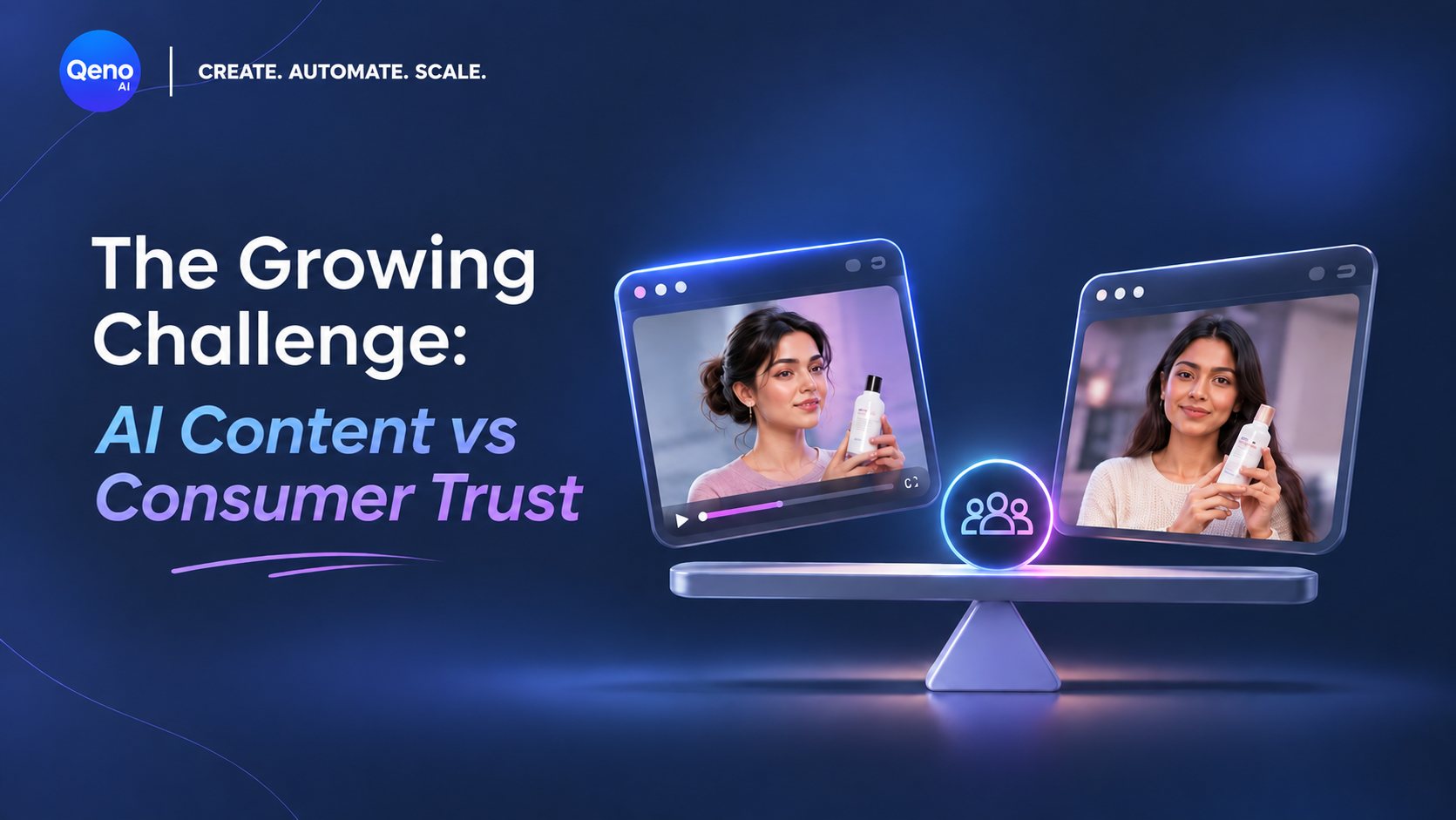
As AI-generated content becomes more common, audiences are becoming more selective about what they believe. A September 2026 Gartner survey of 1,006 U.S. consumers found that 65% believe brands are producing too much AI-generated content in their marketing, while 57% said this content has made them less trusting of brand messaging.
The survey also found that 43% now rely more on real people for shopping information and recommendations because of the growing amount of AI content.
These findings point towards an important shift: audiences aren't necessarily rejecting AI; they're becoming more conscious of how brands use it. For businesses, this means that simply generating more videos isn't enough. The creative experience, product accuracy and way a story is presented all matter.
5 Ways to Make AI UGC Ads Feel More Authentic
1. Start With a Relatable Situation, Not Just the Product
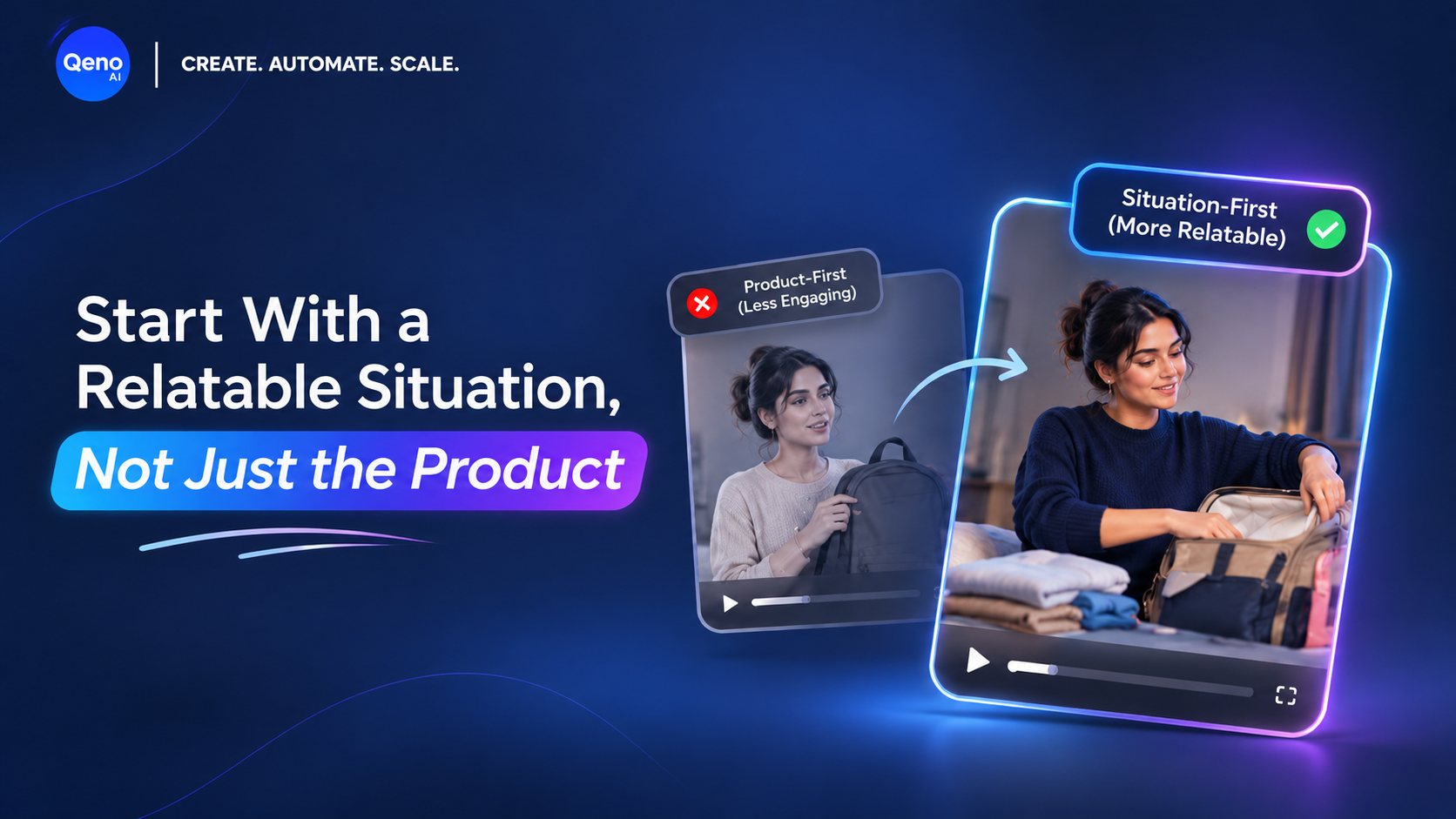
One common mistake in AI UGC advertising is making the product the entire focus of the video. Think about how people actually discover products: they usually connect with a problem, a need or a familiar situation before considering a solution.
Instead of opening with a line like, "Check out this amazing travel backpack!", a brand could build the concept around something more relatable, such as, "Packing for a weekend trip used to mean carrying three different bags."
The second approach gives viewers a situation they can recognise, allowing the product to become part of the story rather than the entire story. A good UGC concept should make the viewer understand why the product matters before asking them to care about what it is.
2. Keep the Product Accurate
A visually appealing AI video can quickly lose credibility when the product changes between scenes. A bottle may suddenly have a different cap, a bag may appear with extra pockets, or the product's colour, proportions and packaging may no longer match the original.
These details matter, especially in e-commerce advertising, because customers expect the product they see in an advertisement to resemble the one they receive.
Before creating a video, use clear product reference images and pay attention to its shape, colour, packaging, proportions and defining features. AI can help present a product creatively, but it shouldn't change what the customer is actually buying.
Product accuracy is not just a visual detail; it is an important part of building confidence in the advertisement.
3. Write Scripts That Sound Like People Speak
Not every UGC video needs a perfect promotional script. In fact, overly polished lines can make creator-style ads feel like traditional commercials with an AI-generated presenter.
"This revolutionary product delivers an unmatched experience for everyone."
Instead of relying on exaggerated claims, use conversational language that feels specific and easy to follow.
"I've been looking for something that makes my daily routine a little easier, and this caught my attention."
The goal isn't to add random pauses or filler words; it's to make the message sound like something a person might genuinely say.
It's also important not to present an AI-generated creator's fictional personal experience as a real customer testimonial. Natural-sounding storytelling should never come at the expense of honesty.
4. Choose a Setting That Makes Sense
The background should support the product story rather than simply make the video look attractive. A skincare product might fit naturally into a bathroom or morning routine, a backpack could appear during a packing or travel scenario, and a kitchen product belongs in an environment where it would actually be used. The setting, product action and creator's behaviour should feel connected.
Consider whether the creator interacts naturally with the product, whether the lighting suits the environment, whether the product fits the scene and whether the movement feels consistent. These small creative decisions can make a significant difference to how believable a video feels.
Authenticity often comes from a setting that makes sense, not from adding more visual effects or making every frame look perfect.
5. Be Transparent About AI
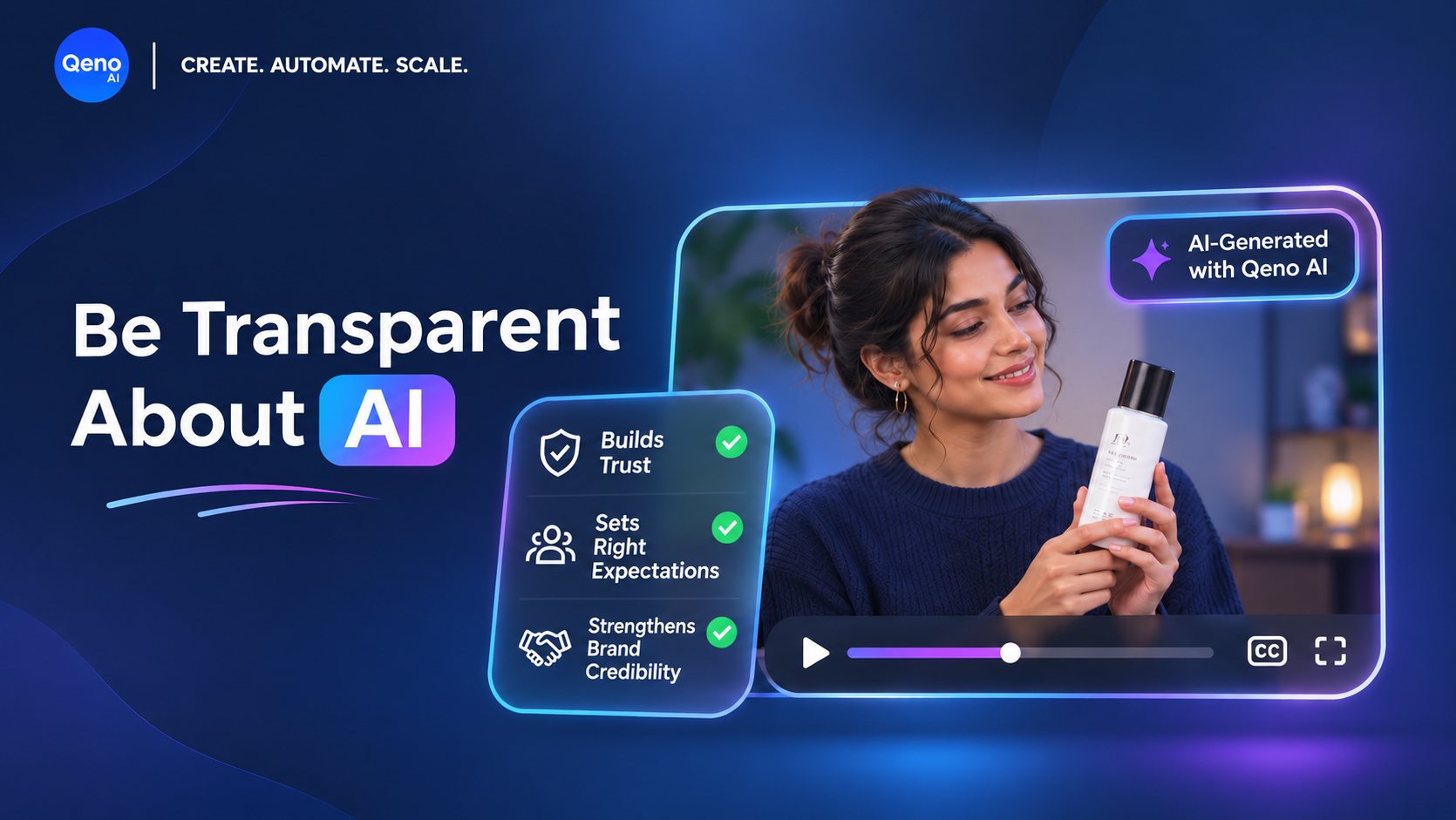
As AI-generated videos become more realistic, transparency is becoming an important part of responsible advertising. Platforms have their own requirements for disclosing realistic AI-generated content and commercial promotions, so brands should review the applicable rules before publishing. For example, TikTok has AI-generated content labelling guidance as well as separate commercial-content disclosure requirements.
Being transparent doesn't have to weaken a creative idea or make an advertisement less engaging. Instead, it helps set honest expectations about what viewers are watching. Brands should also ensure that product claims, endorsements and testimonials are genuine and properly supported, particularly when using AI-generated presenters or scenarios.
While these things are important, Qeno AI fills this gap. You just need to give your idea of what you want and automatically everything is handled like the AI settings, the right script, and everything from our end. You don't need to select anything; that's the gap we're bridging.
Explore Qeno AI: https://www.qenoai.com/
AI Should Improve the Creative Process, Not Replace Creative Thinking
The biggest opportunity with AI UGC isn't simply producing more videos; it's having more room to explore different creative directions. A single product can be presented through multiple situations, storytelling angles and creator-style formats.
Brands can experiment with different hooks, product demonstrations and video concepts without organising a traditional shoot for every variation.
This is where platforms such as Qeno AI can help. Qeno AI brings product visuals and AI-powered UGC-style video creation into the creative workflow, helping brands turn product ideas into video ad concepts.
However, the foundation remains the same: understand the audience, keep the product accurate and give every video a clear reason to exist. AI can help with the creation process, but the creative direction still determines whether the final video feels relevant.
Before You Publish Your Next AI UGC Ad
Before publishing, take a moment to review the video as a viewer would:
- Does the opening connect with a real customer need?
- Is the product represented accurately?
- Does the script sound conversational, and does the setting fit the product?
- Are all testimonials and product claims genuine and supportable?
- Have the relevant AI and advertising disclosures been considered?
These questions help move the process beyond simply generating an AI video and towards creating a more thoughtful product story.
Final Thoughts
AI has made video creation more accessible, but it hasn't changed what makes an advertisement meaningful. People still want to understand a product, see how it fits into their lives and feel confident about what they're being shown.
The brands that use AI thoughtfully have a better opportunity to create content that is not only visually appealing but also relevant and credible.
The real value of AI UGC is not just how quickly a video can be generated, but how effectively a product story can be brought to life.
Ready to Turn Your Product Into a UGC Video Ad?
You've got the product. You've got the idea. Now it's time to bring the story to life.
With Qeno AI, you can turn your product images and details into AI-powered UGC-style video ads without having to organise a traditional shoot for every new creative concept. Explore creator-style presentations, experiment with different storytelling angles and develop video ad variations for your next campaign.
Instead of starting every video from scratch, give your product a new way to be discovered.
Your next product video starts here.