Creative Workflow
The Creative Pipeline Problem: Why Ecommerce Brands Need a Repeatable Ad Workflow
Table of Contents
- 011. Why Creative Production Becomes a Bottleneck
- 022. Growing Catalogues Need More Than Repeated Creatives
- 033. A Repeatable Workflow Doesn't Mean Repetitive Advertising
- 044. Where AI-Powered Platforms Like Qeno AI Fit In
- 055. The Role of Human Creativity Still Matters
- 06Building a Creative Pipeline That Can Grow With Your Brand
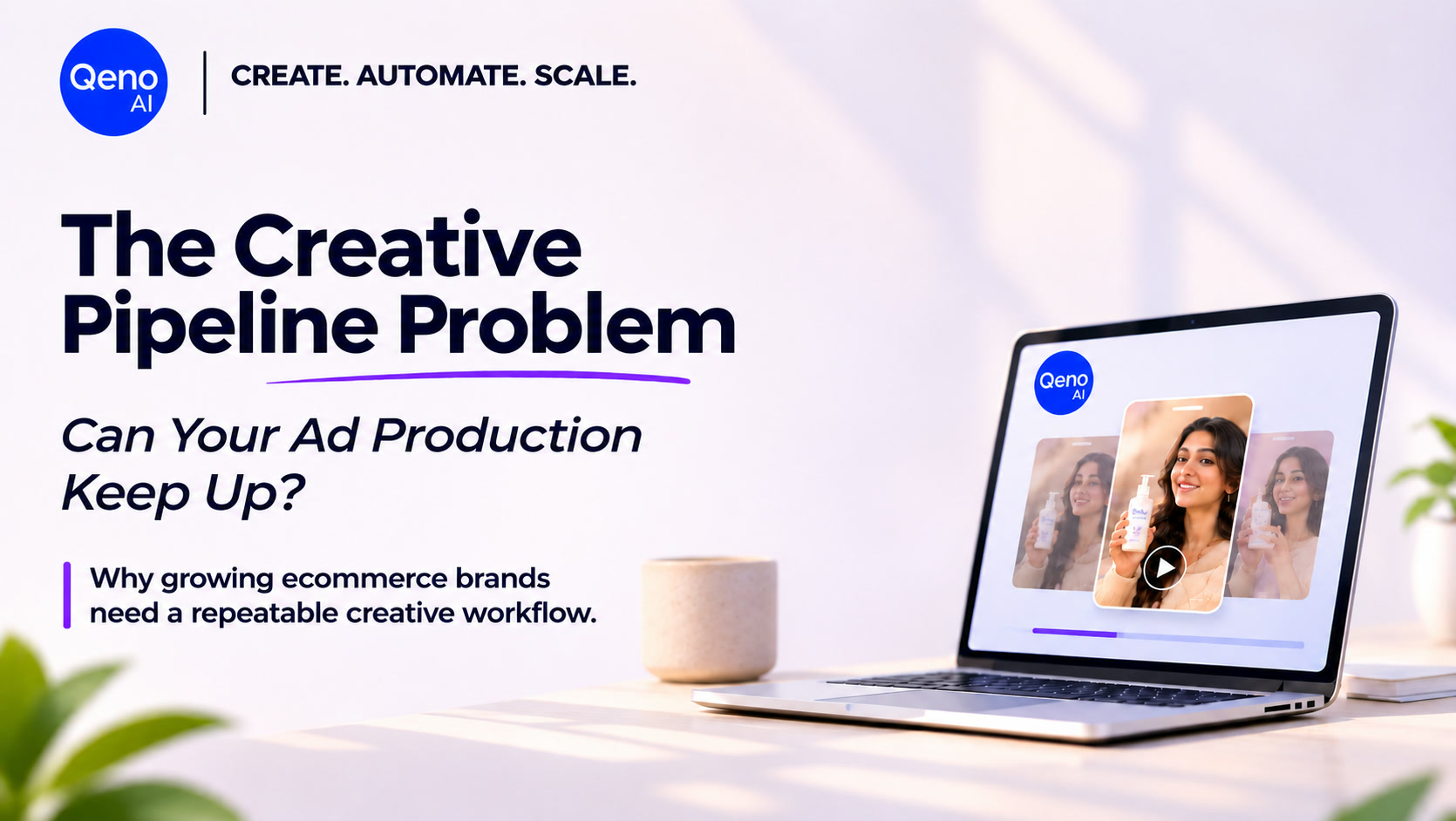
As ecommerce brands grow, their marketing requirements grow with them. More products mean more campaigns, more audiences to reach and more advertising creatives to develop.
But while brands invest in product development, marketing strategy and customer acquisition, one challenge often receives less attention: maintaining a consistent supply of quality video ad creatives.
Creating each video can involve briefing creators, sharing product information, coordinating production, reviewing edits and preparing content for advertising platforms. When this process is repeated for every new product or campaign, it can become difficult to manage.
The challenge isn't necessarily a shortage of creative ideas. It's the lack of a repeatable creative production workflow.
1. Why Creative Production Becomes a Bottleneck
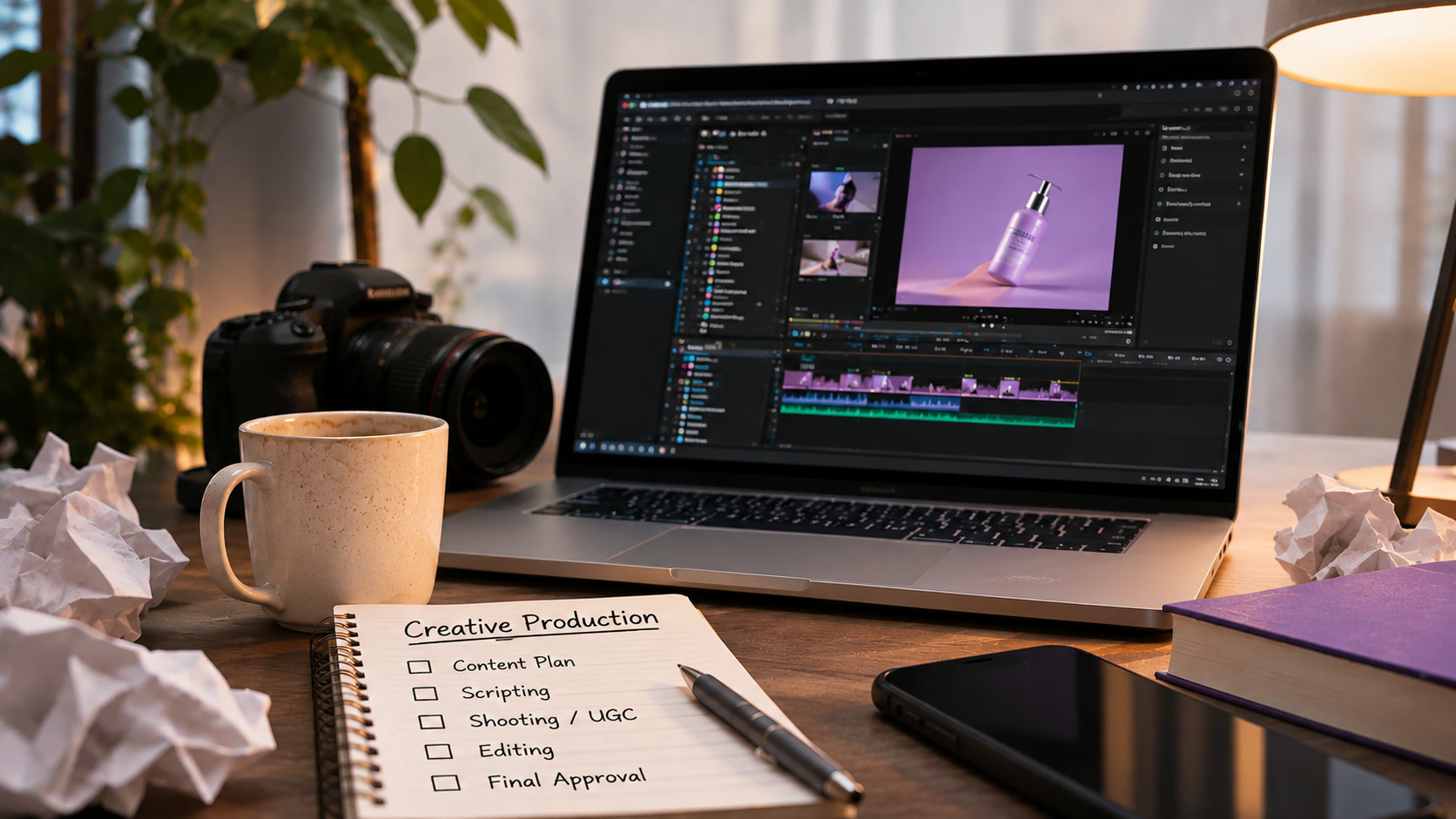
For smaller product catalogues, managing video production individually may seem manageable. But as a brand expands, the same approach becomes increasingly demanding.
Every product has different features, benefits and selling points. Each campaign may also require different messaging and creative variations.
When every video requires a fresh production process, marketing teams spend more time coordinating work and less time evaluating campaign performance or planning their next creative direction.
Over time, creative production can become a bottleneck that slows down marketing activities.
2. Growing Product Catalogues Need More Than Repeated Creatives

One of the common mistakes brands make is relying on a limited number of creatives across multiple products.
A skincare product, a lifestyle accessory and an electronic device do not communicate the same value to customers. Each requires its own visual presentation and product-focused messaging.
Simply changing the product image while keeping the same advertising approach may not be enough.
Brands need a creative process that supports consistency in production while allowing flexibility in how individual products are presented.
3. A Repeatable Workflow Doesn't Mean Repetitive Advertising

Building a repeatable workflow is not about making every advertisement look identical.
It means creating a more organised way to manage the work behind every creative.
Product information should be easy to access. Creative requirements should be clear. Production should not depend entirely on coordinating each task manually.
Most importantly, teams should have room to experiment with different presentations, messaging and advertising formats without rebuilding the entire process every time.
This balance between consistency and creative flexibility can make a significant difference as an ecommerce brand scales.
4. Where AI-Powered Platforms Like Qeno AI Fit In

This is where AI-powered creative platforms can help reduce the pressure on traditional production workflows.
Qeno AI brings UGC-style video ad creation into a more accessible process for ecommerce brands. Instead of coordinating a separate production process for every product, brands can use product images and information to generate creator-style video advertisements.
For Shopify brands, Qeno AI can extract product information directly from a product URL, including available images, descriptions, selling points and reviews. Users can select AI creator avatars and advertising hooks, while the platform generates video ads with product-focused feature callouts.
This gives marketing teams another way to develop product-specific creatives without depending on physical product shipments to creators for every video.
Rather than replacing creative strategy, AI helps reduce some of the production work involved in bringing those ideas to life.
5. The Role of Human Creativity Still Matters

Automation can make production more efficient, but it doesn't eliminate the need for good creative decisions.
Brands still need to understand their audiences, identify relevant product benefits, choose the right positioning and review whether their advertisements communicate the intended message.
AI can support the execution, but marketing teams remain responsible for the direction.
The strongest approach combines an organised production workflow with human judgment, experimentation and a clear understanding of customer needs.
Building a Creative Pipeline That Can Grow With Your Brand
As ecommerce competition increases, brands need to think beyond individual advertisements and consider how their creative production operates as a whole.
A repeatable workflow can help teams manage growing product catalogues, reduce unnecessary coordination and maintain a more consistent supply of advertising content.
AI-powered platforms such as Qeno AI make this process more accessible by connecting product information with UGC-style video ad creation.
Because scaling advertising shouldn't mean starting the creative process from scratch every time.
Ready to Rethink Your Video Ad Production Workflow?
Explore how Qeno AI can help your brand turn product information into UGC-style video ads.
Visit https://www.qenoai.com/