AI UGC ads
Your Product Page Has the Details. But Does It Have the Story Your AI Ad Needs?
Table of Contents
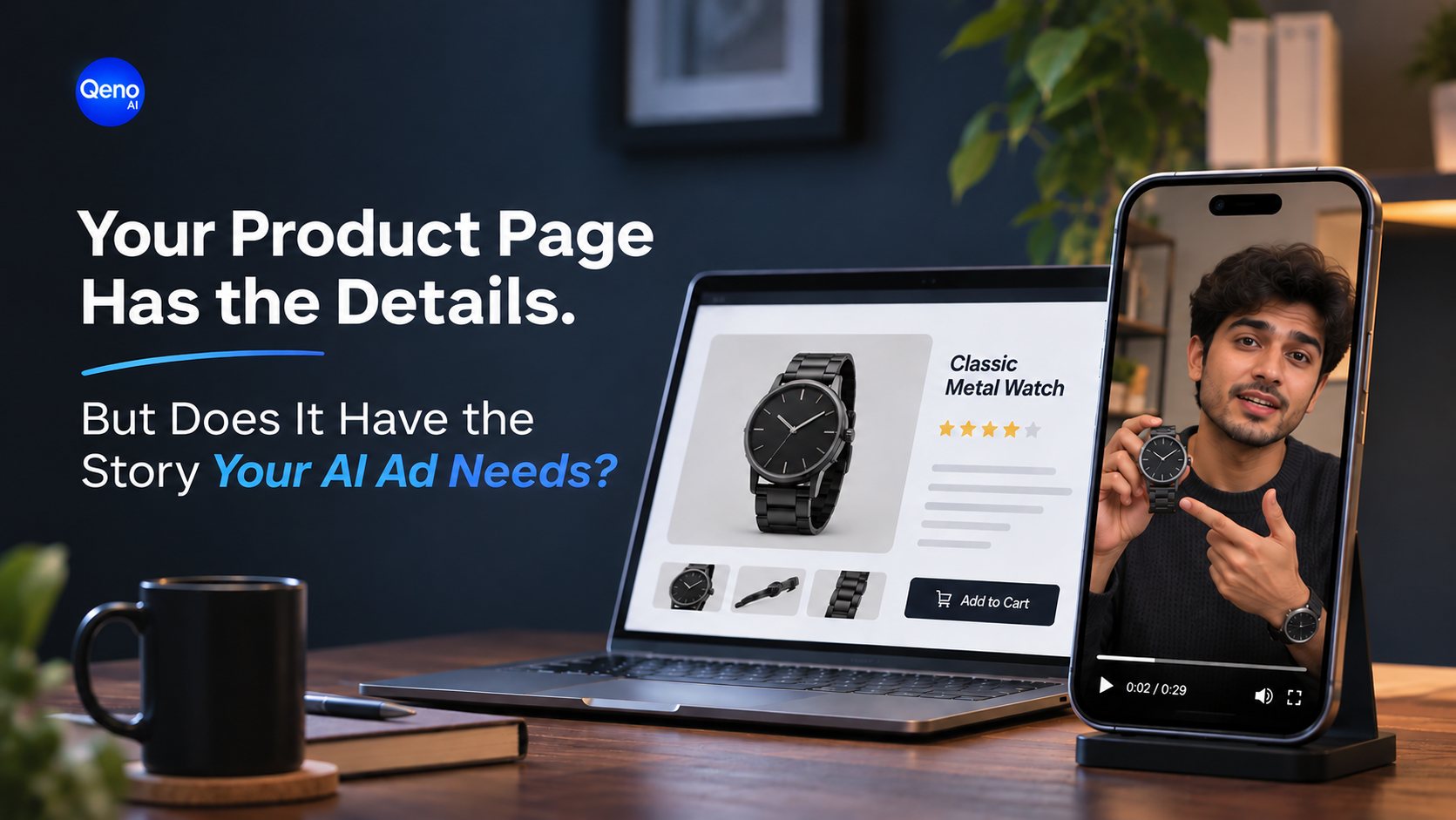
A customer lands on your product page. They see the photographs, read the description, check the features and perhaps look through a few reviews. Everything they need to understand the product seems to be there.
Now imagine turning that same product page into an AI-generated video advertisement. The product is introduced, its features are listed and an AI creator presents it in a familiar UGC-style format. It looks like an advertisement, but does it give someone a reason to watch?
That's where the real creative work begins. A product page explains what a brand sells, while an advertisement needs to show people why that product matters to them. Both may use the same information, but they don't necessarily tell the same story.
The challenge isn't always finding a tool that can generate a video. Sometimes, it's knowing what the video should say in the first place.
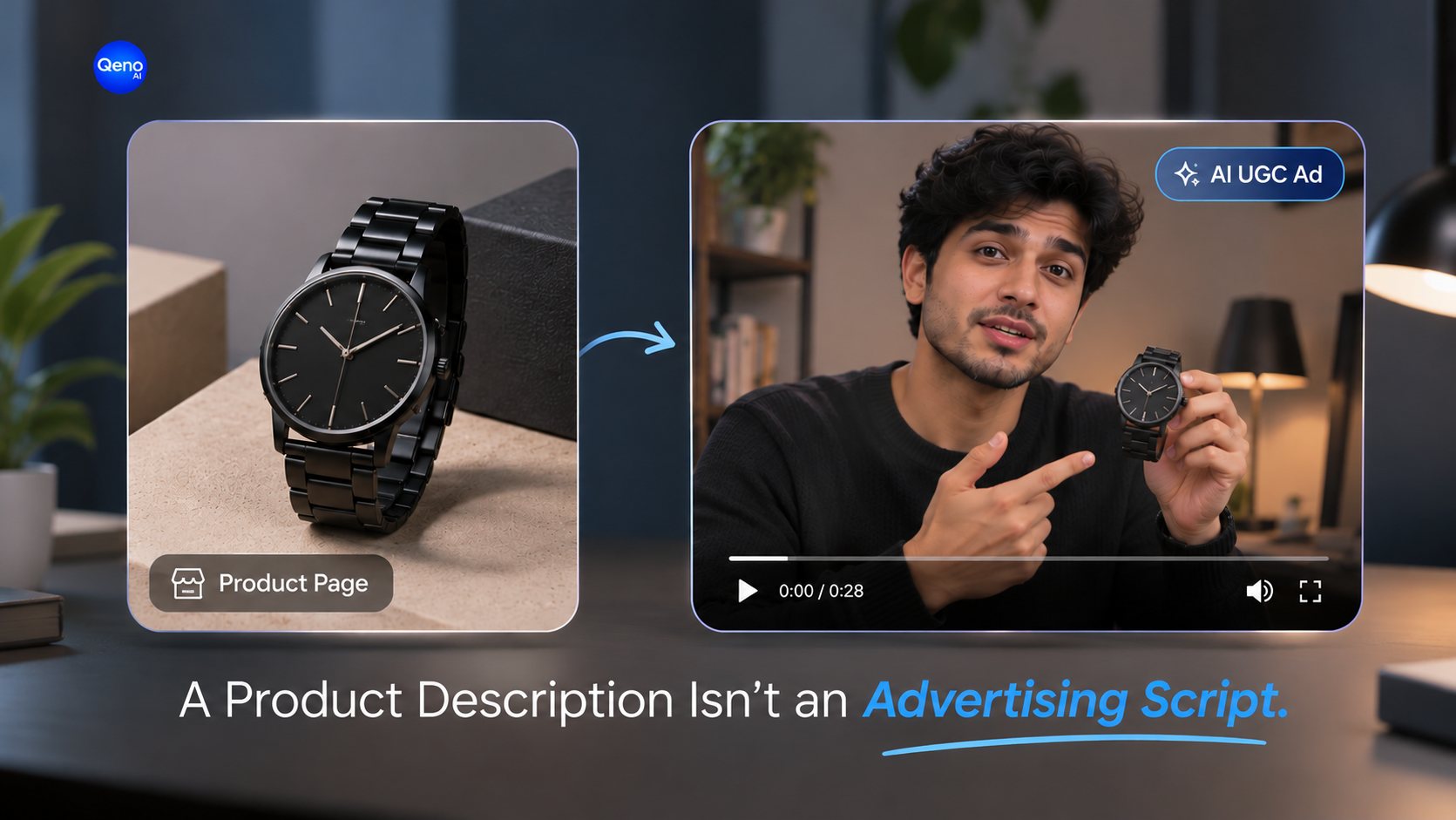
A product description isn't an advertising script
Consider a brand selling a rechargeable desk lamp. Its product page might mention adjustable brightness, touch controls, a rechargeable battery and a compact design. Now imagine a video opening with:
"This desk lamp comes with adjustable brightness, touch controls and a rechargeable battery."
The information is correct, but the presentation feels more like someone reading a product catalogue than recommending something.
Compare that with a different opening:
"Working late has become a little easier since I changed my desk setup."
This time, the product enters the conversation through a situation someone might recognise. A student studying late or a professional working from home could relate to it. The product and its features haven't changed; what has changed is the way the brand introduces them.
A product page provides the details, but the advertising idea determines which details deserve attention. Simply transferring a description into a video script may communicate information, but it doesn't automatically make that information interesting to a potential buyer.
What does your product page tell you about the buyer?
A product page can explain what an item does, but it doesn't always reveal why someone would want it. A student might consider the desk lamp useful for late-night studying, while someone working remotely might be more interested in improving their workspace. Another buyer might simply appreciate its design. All three could purchase the same product, but their reasons for choosing it may be very different.
This is why understanding the audience matters before writing a video script. Customer reviews, frequently asked questions and product feedback can reveal what buyers appreciate, what concerns them and what they want to know before purchasing. These details can become useful creative starting points.
Instead of addressing everyone with one generic message, a brand can develop different advertisements around situations its customers actually experience. It doesn't require a complicated marketing exercise, but it does require looking beyond the product description and considering the person who might use the product.
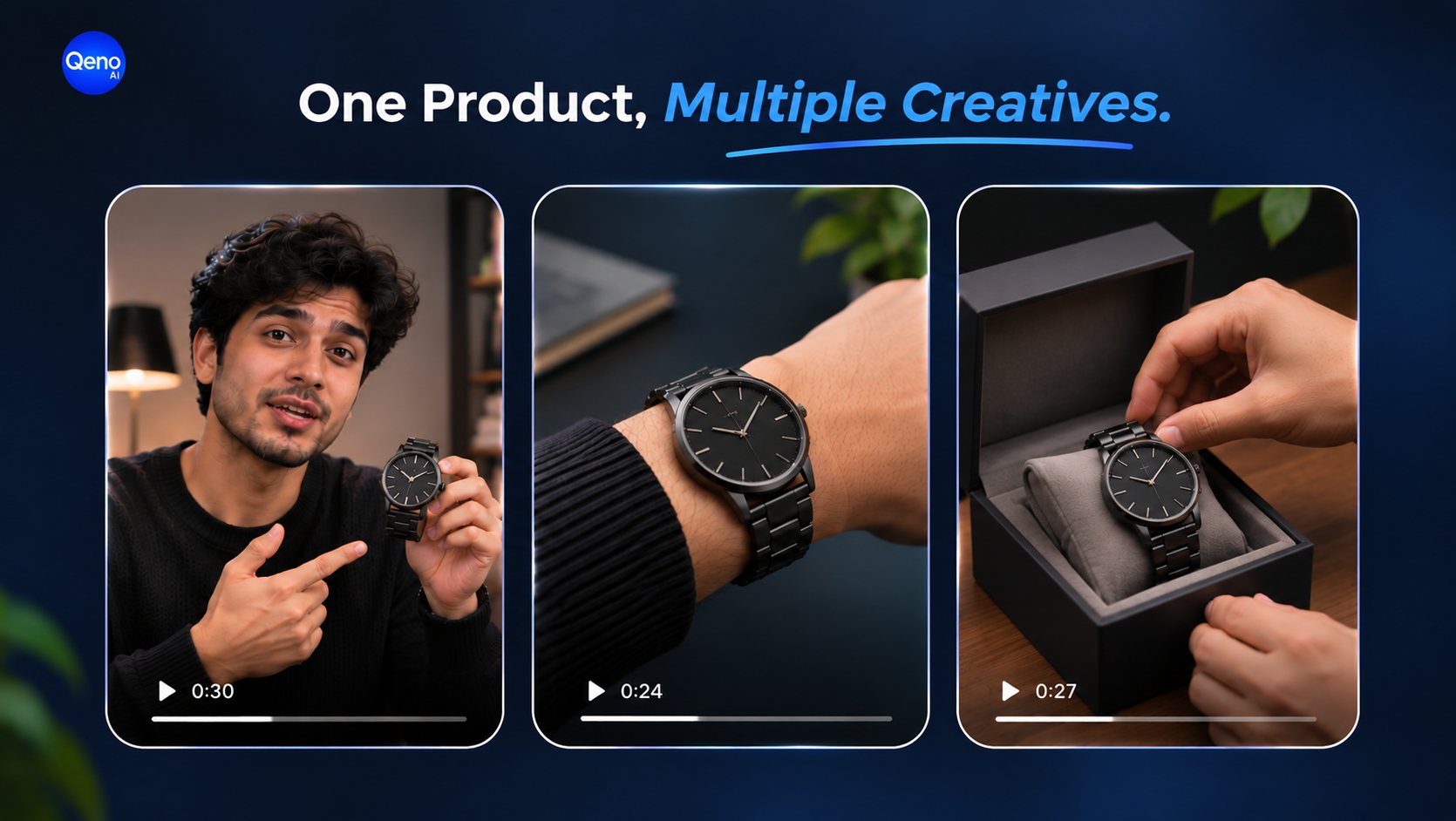
One product can tell several different stories
Let's return to the desk lamp. A brand could develop three different advertising concepts around the same product.
- Problem-led: "Still struggling to find comfortable lighting for your late-night work?"
- Lifestyle-led: "A small addition that made my workspace feel more complete."
- Product demonstration: "Here's how I adjust the brightness depending on what I'm doing."
Each idea has a different purpose. One introduces a problem, another presents a lifestyle context, and the third demonstrates a product feature. They use the same product information, but the way that information is presented changes.
This is more meaningful than generating several videos that only change the creator's appearance or background. For brands exploring AI-generated video ads, the opportunity is to experiment with different messages, settings and presentations while keeping the underlying product information consistent.
The goal isn't to produce more videos simply because AI makes it possible. It's to give each creative a reason to exist.

Where Qeno AI fits into the process
For brands managing several products, starting every video from a blank page can make creative production unnecessarily repetitive. This is where AI-powered video creation can make the process more accessible.
Qeno AI offers a product-focused approach to creating UGC-style video advertisements. For Shopify stores, users can paste a product URL into Qeno AI, allowing the platform to extract product information such as images, titles, prices and key selling points as a starting point for video creation.
From there, users can select a suitable creator avatar, add a simple prompt or advertising direction, and generate creator-style video ads. Rather than manually rebuilding the product information for every new concept, brands can use what they already have and explore different ways to present their products.
Consider our desk lamp example again. A brand could start with its existing product page and explore a study-focused presentation, a work-from-home setting or a closer product demonstration. The same product becomes the starting point for different creative outputs.
However, extracting product information doesn't automatically determine the best advertising angle. A marketer still needs to understand the intended customer, choose the message and make sure the creator's dialogue sounds natural. Qeno AI helps connect product information with the video-generation process, while thoughtful creative direction remains important to the final result.
Good-looking videos still need accurate products
Imagine the original desk lamp is matte black, with a particular base design and touch controls. In a generated video, its shape changes slightly, the colour looks different or the controls appear in the wrong place. The scene might look convincing, but it is no longer accurately representing the product.
This matters because customers should be able to recognise what the brand is actually selling. Clear product photographs, useful reference angles and accurate descriptions provide important context during generation. The finished video should still be reviewed for packaging, colour, product design, dialogue and advertising claims.
A generated creator shouldn't describe a feature that the brand cannot support, and an attractive lifestyle scene shouldn't distract from an inaccurate product representation. AI can make video production easier, but the brand remains responsible for what it publishes.
Before generating your next product video...
Go back to your product page and look beyond the photographs and description. Think about the person who might buy the product, the situation in which they would use it and the reason they might choose it over another option. Then decide what you want the advertisement to communicate.
It could be a familiar problem, a useful feature, an everyday situation or a benefit that deserves more attention. Once that direction is clear, your existing product information becomes a much better starting point for AI video creation.
With Qeno AI, brands can bring Shopify product information into a creator-style video workflow and explore different ways to present their products without arranging a traditional production shoot for every concept.
Your product page already has the details. Now give those details a story worth watching.